

Innovation with Old Math
May 27th, 2025
Innovation must be shiny, fancy, and new. Ha, says who? Because I beg to differ.
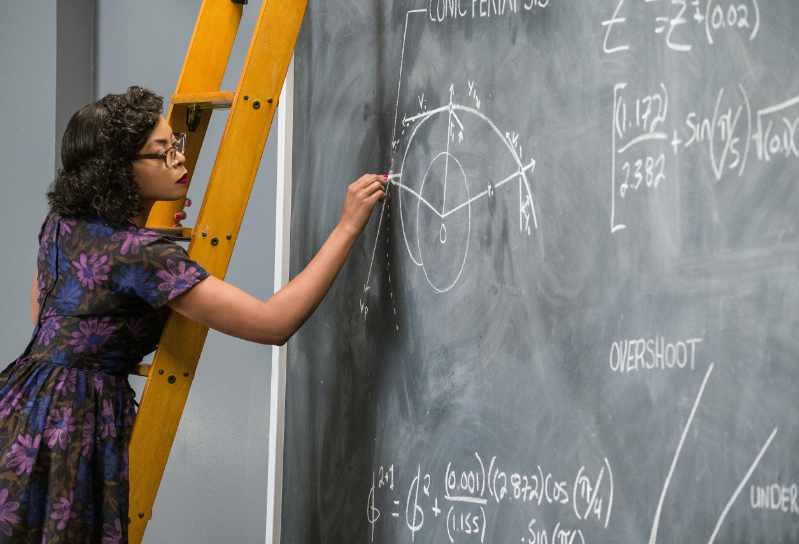
Remember that scene from the movie Hidden Figures (Spoiler alert! But c’mon, it is an 8-year old movie) when Katherine Johnson (played by Taraji P. Henson) discovered the correct mathematical formula to bring the astronauts home from space? A team of the biggest brains in the US were struggling to solve the problem when she made her discovery and declared that it wasn’t new math but old math. That was innovation.
Now let’s apply similar logic to market research. A healthcare provider approached TRC wanting to do conjoint pricing research on 200+ medical procedures. And if you know conjoint, doing just 1 requires some effort if you’re doing it right. 200 was out of the question both due to time and budget. So OK, we needed a way to reduce the list from 200 to something more manageable, like 20. Skipping the details and cutting to the chase (this isn’t a 3-hr movie), we employed a shiny and new methodology called Multidimensional Scaling. Just kidding, its origins trace back to the 1930s! So indeed, culling through our repertoire of methodological knowledge, the best tool for the job was an old one. It pays to know your history.
And because I’m feeling generous, how about some bonus innovation? Think of this as the cutscene as the credits are rolling. Executing 20 conjoints in a study is no cinch either. But as I keep telling my mother, that choice modeling expertise pays off. Making use of some conditional assignments and advanced hierarchical Bayesian modeling while accounting for the type of procedure, we were able to field our study with the necessary sample without blowing the budget or taxing our respondents.
Start with a solid base of knowledge, add in some brainstorming, and you’ll innovate and problem-solve in no time!
Reference: Theodore Melfi, director. Hidden Figures [Film]. Fox 2000 Pictures, Chernin Entertainment, Levantine Films. 2016.