

Rural Healthcare Crisis Is a Healthcare Market Research Problem – Here’s Why
May 8th, 2026
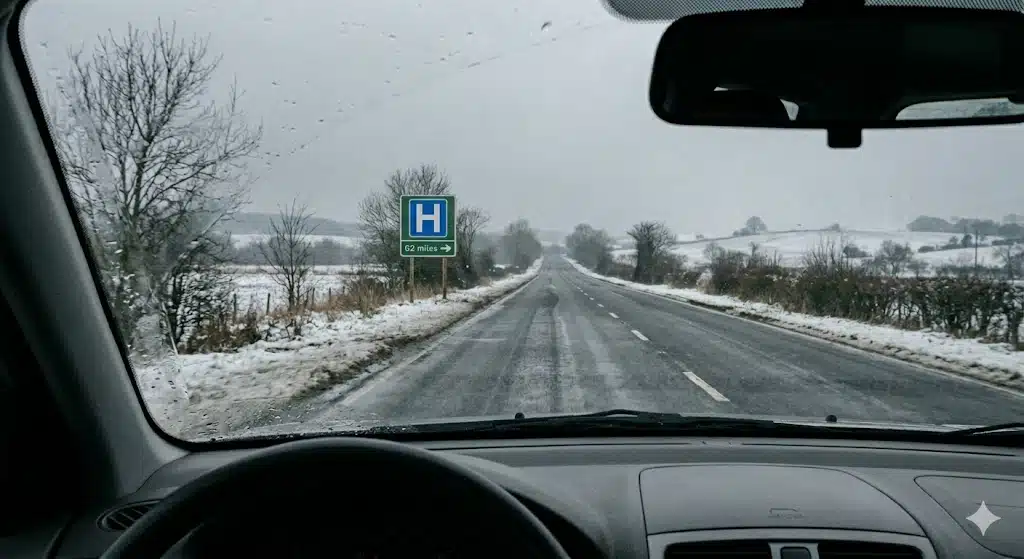
I grew up in Michigan’s Upper Peninsula, a place where “running to the doctor” could mean a 60-minute drive on a good-weather day. For many rural Americans, that reality hasn’t changed. In fact, it’s getting worse. As someone who has spent her career in healthcare market research, I believe this is one of the most important, and under-discussed, challenges in our industry.
How Many Rural Hospitals Have Closed since 2010?
Since 2010, nearly 150 rural hospitals have closed or stopped providing inpatient services in the United States, and the pace is accelerating1. According to the Chartis Center for Rural Health2, 46% of rural hospitals currently operate at a negative margin, and more than 430 are vulnerable to closure. For the 46+ million Americans living in rural communities, a hospital closure doesn’t just mean an inconvenience. It means the loss of emergency care, obstetric services, and often the community’s largest employer3.
In some rural counties, the nearest ER is now over an hour away. For a parent with a child running a high fever at midnight, that’s not a statistic – that’s a crisis.
The workforce picture compounds the problem. While 20% of the U.S. population lives in rural areas, only 10% of physicians practice there4. HRSA (Health Resources and Services Administration) projects a national shortage of over 141,000 physicians by 2038, with rural areas being disproportionately impacted5. The outlook for Nurses is no better, with the US facing major projected shortfalls by 2030, with the most severe gaps in rural and underserved communities. Nearly two-thirds of all primary care Health Professional Shortage Areas (HPSAs) are in rural areas4.
What Is the $50 Billion Rural Health Transformation Program?
Congress established the $50 billion Rural Health Transformation Program in 2025 – the largest federal investment in rural healthcare ever. The funding is allocated to states over five years across five strategic pillars: preventive health, sustainable access, workforce development, innovative care models, and technology innovation. All 50 states have received first-year awards7, and early state plans indicate a strong emphasis on digital health infrastructure, electronic health records, and virtual care (monitoring & telehealth) expansion.
Whether this investment reaches the small community health centers and critical access hospitals that need it most, rather than being absorbed by large technology vendors, remains an open and important question8. KFF (formerly Kaiser Family Foundation) estimates that this fund covers just over one-third of the estimated Medicaid funding rural areas are set to lose over the next decade9, making effective allocation of these funds even more critical.
As researchers, we’re in a unique position to help answer these questions by tracking whether these investments are actually reaching patients and providers on the ground. This isn’t just a research exercise it’s the kind of work that can drive accountability and shape how the next round of funding gets allocated.
Does Telehealth Work in Rural Communities?
Yes – but with significant caveats around broadband access, digital literacy, and patient preference for in-person care.
A 2021 narrative review in the Journal of Medical Internet Research found that telehealth models in rural settings were associated with positive outcomes across patient satisfaction, cost reduction, physician recruitment and retention, and improved access to care10. More recent studies confirm that telehealth significantly reduces travel burdens, improves chronic disease management (particularly diabetes and hypertension)11, and lowers hospital readmission rates through remote follow-ups.
But telehealth is not a silver bullet. Broadband connectivity/access remains unreliable in many rural areas, digital literacy varies widely, and reimbursement policies are still catching up to the technology. And there’s a dimension that often gets overlooked: many rural patients, especially older adults, may simply prefer in-person care. Telehealth adoption isn’t just a logistics problem, it’s also a trust and preference problem. If we’re designing programs without understanding what rural communities actually want, we risk building solutions that look great on paper but go unused in practice.
These are solvable problems, but only if infrastructure is invested in alongside innovation and these investments are paired with research that listens to the people we’re trying to serve.
This is also where the methodologies our industry has spent decades refining come into play. Conjoint analysis can quantify how rural patients trade off telehealth convenience against in-person continuity of care. Patient satisfaction trackers can tell health systems whether a new virtual care program is actually moving the needle on access. Brand equity research can reveal whether rural communities trust the hospital system that is now delivering care from 90 miles away. And emerging tools — including AI-powered digital twins and personas — give us new ways to model rural patient behavior when traditional sample is hard to reach. The methods exist. The question is whether we are applying them where the need is greatest.
Why Is Rural Healthcare a Healthcare Market Research Problem?
As market researchers serving the healthcare industry, we have a responsibility to make sure rural voices are represented in the data that informs policy and shapes product design, and care delivery. Rural populations are often underrepresented in research panels, harder to reach through digital methodologies, and easy to overlook in national studies.
This is a blind spot. The people I grew up with in the U.P. (teachers, small business owners, families driving over an hour for a specialist appointment) deserve the same attention in our research as their urban/suburban counterparts. If we’re going to help our clients build strategies that truly serve all Americans, we need to design studies that intentionally include rural perspectives, invest in mixed-mode methodologies that reach these communities, and ask the hard questions about access, trust, and unmet need.
The rural healthcare crisis isn’t just a policy problem, it’s a research problem. And it’s one I take personally.
Let’s Talk About It
If you’re scoping a healthcare study and wondering how to meaningfully include rural voices, let’s talk methodology. Or if you simply have a perspective on rural access that you think more people should hear, I’m all ears.
There’s a lot more to dig into: telehealth barriers, methodology for hard-to-reach populations, what accountability looks like for federal investment. Stay tuned.
Contact Sarah Phillips
Visit Sarah’s bio page.
References:
- USDA ERS, Rural Hospital Closures 2005-2023 (Feb 2025)
- Chartis Center for Rural health, 2025 rural Health State of the State (Feb 2025)
- Boston University SPH, The Loss of a Rural Hospital Is Devastating for a Local Community (Nov 2025)
- NRHA, Rural Workforce recruitment and retention factors (2025)
- HRSA, State of the U.S. Health Care Workforce, 2025 (Dec 2025)
- CMS, Rural Health Transformation Program Launch (Sept 2025)
- HHS, CMS Announces $50 Billion in Awards to All 50 States (Dec 2025)
- CBS News / KFF Health News, Big Companies Position Themselves for PayDay from $50B Federal Rural Health Fund (April 2026)
- KFF, A Closer Look at the $50 Billion rural Health Fund (Aug 2025)
- Butzner, M. & Cuffee, Y. (2021). Telehealth Interventions and Outcomes Across Rural Communities. JMIR, 23(8), e29575.
Frequently Asked Questions (FAQ section)
What is rural healthcare market research?
Rural healthcare market research is the practice of gathering and analyzing data from patients, providers, and payers in rural and underserved communities to inform care delivery, policy, and product decisions. It requires mixed-mode methodologies designed to reach populations underserved by digital-only panels.
Why are rural populations underrepresented in healthcare research?
Rural Americans make up 20% of the U.S. population but are difficult to reach through standard digital panels, often lack reliable broadband access, and are frequently excluded from nationally-weighted samples that over-index on urban and suburban respondents.
How do you reach rural respondents in market research studies?
Effective rural outreach requires mixed-mode methodology — combining phone (IVR and live), mail, and digital recruitment. TRC Insights uses proprietary communities, IVR panels, and HITRUST-certified outreach to healthcare populations specifically.
What methodologies work best for rural healthcare research?
Mixed-methods designs that integrate qualitative and quantitative research, conjoint analysis for preference trade-offs (e.g., telehealth vs. in-person), patient satisfaction trackers, and segmentation studies are the strongest fit for rural healthcare research questions.
How can health systems measure telehealth satisfaction in rural communities?
Longitudinal satisfaction trackers, Net Promoter Score (NPS) studies, and post-visit survey programs can measure rural telehealth satisfaction. TRC Insights’ Satisfaction & Loyalty practice specializes in healthcare satisfaction measurement with hard-to-reach populations.