

Shrinkflation vs. Premiumization: Strategic Pricing in Today’s Market
May 6th, 2025

Introduction: Why Are Products Changing?
If you’ve recently noticed your favorite snack bag seems lighter, or your go-to shampoo now comes in a smaller bottle but with flashier branding and a higher price, you’re not imagining things. These are signs of two major trends shaping today’s consumer goods landscape: shrinkflation and premiumization.
Both are strategies that companies use to respond to inflation, tariffs, increased material costs, changing consumer behavior, and brand positioning. But they work in opposite directions—and each tells a different story about how brands are navigating economic pressures and evolving consumer expectations.
Shrinkflation: Less Product, Same Price
Shrinkflation is a play on the words “shrink” and “inflation.” It happens when companies reduce the size, volume, or quantity of a product while keeping the price the same—or even raising it slightly; effectively increasing the per-unit cost. This tactic allows companies to manage escalating production expenses without overtly raising prices, which might deter price-sensitive consumers.
Examples of Shrinkflation:
- Toilet Paper: Research from LendingTree reports that brands like Angel Soft reduced the number of sheets per roll from 429 in 2019 to 320 in 2024. Although the overall package price dropped from $9.97 to $8.44, the cost per 100 sheets increased by 13.5%, from $0.19 to $0.22.
- Cereal: In 2021, General Mills reduced the size of their “family size” cereal boxes from 19.3 ounces to 18.1 ounces while maintaining the same price. This change effectively increased the price per ounce, meaning consumers were paying more for less product. This downsizing represented a decrease of approximately 6.2% in product quantity.
Consumer Perception and Response:
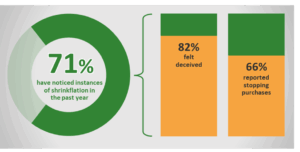
Shrinkflation is seen as a “sneaky” tactic where companies take advantage of unsuspecting customers, and it can lead to negative consumer reactions:
- Awareness: A survey from LendingTree indicated that 71% of Americans have noticed instances of shrinkflation in the past year.
- Feelings of Deception: Among those who noticed, 82% felt deceived by the practice.
- Behavioral Changes: Approximately 66% of consumers reported stopping purchases of products they perceived as subject to shrinkflation.
These statistics underscore the potential risk to brand loyalty and trust when consumers perceive they are receiving less value for their money.
Premiumization: Elevating Products to Command Higher Prices
Premiumization takes the opposite approach. Instead of reducing product size or quality, companies upgrade the product or experience and charge more for it. It’s about creating a sense of higher value, often with better ingredients, upscale branding, or more compelling storytelling.
It’s a growth strategy, often used to target more affluent or quality-conscious consumers. Premiumization works well in saturated markets where brands want to differentiate themselves and justify a higher price point. This strategy targets consumers willing to pay more for perceived added value, such as superior ingredients, craftsmanship, or exclusivity.
Examples:
- Spirits Industry: According to industry data from IWSR, The U.S. whiskey category has experienced significant premiumization, with premium-and-above price tiers outpacing standard-and-below tiers by a factor of three to one. In 2021, for the first time, U.S. whiskey volumes at premium-and-above levels surpassed those at standard-and-below.
- Beauty Products: Mass-market beauty brands are increasingly adopting premiumization strategies. Companies like L’Oréal and Unilever have introduced upscale product lines and collaborations with luxury brands, blurring the lines between mass and prestige markets.
How to Spot These Trends in the Wild
With a little bit of effort, consumers can usually spot these trends on the shelves, especially with products they purchase regularly. Keep an eye out for the following:
- Smaller product sizes with no price change = shrinkflation
- New luxury versions with storytelling and higher prices = premiumization
- “Same price, new look!” = often a rebrand to mask shrinkflation
- “Crafted,” “Artisanal,” or “Curated” language = hallmarks of premiumization
Consumers today are smarter and more informed. While shrinkflation can backfire if shoppers feel deceived, premiumization can thrive when it aligns with consumer values like quality, health, or sustainability.
Consumer Willingness to Pay:
Despite economic pressures, a significant segment of consumers remains open to paying a premium for enhanced products:
- Sustainability: A survey by PwC found that consumers are willing to spend an average of 9.7% more on sustainably produced or sourced goods.
- Trust: Consumers are willing to spend 51% more with retailers they trust, highlighting the financial value of building and maintaining consumer trust.
These insights suggest that consumers prioritize attributes like sustainability and trust, and are willing to pay more for products that align with these values.
Consumers are also willing to pay more for goods with the “organic” label:
- Price Premiums: A study found that consumers are willing to pay an average premium of 20% for organic rice compared to conventional options.
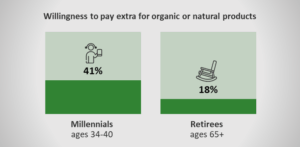
- Generational Differences: In the United States, 41% of older Millennials (ages 34-40) expressed willingness to pay extra for organic or natural products, whereas only 18% of retirees (ages 65+) shared this sentiment. (from a Statista report)
- Health and Environmental Concerns: Consumers often associate organic foods with health benefits and reduced environmental impact, motivating them to invest more in such products.
- Income Levels: Higher income levels are associated with a greater willingness to pay for organic foods, especially in regions with better environmental quality.
This inclination to pay more for organic products exemplifies the premiumization strategy, where consumers perceive added value in products that cater to their health and environmental concerns. For businesses, understanding these consumer motivations is crucial for effective pricing strategies and product positioning.
Strategic Implications for Businesses
When deciding between shrinkflation and premiumization, companies must consider their brand positioning, target demographics, and the potential impact on consumer trust.
- Shrinkflation: While it may offer short-term financial relief, shrinkflation risks long-term consumer dissatisfaction if perceived as deceptive. Transparent communication about product changes is essential to mitigate backlash. To many, shrinkflation is simply “lazy marketing”. A desperate move to capture a little more margin.
- Premiumization: This approach can enhance brand equity and attract consumers less sensitive to price increases. However, it requires genuine improvements in product quality or features to justify the higher cost. For a brand to succeed in premiumization, they need to spend time and money on research and branding.
At TRC Insights, we can help with these challenges in a few ways:
- Price Elasticity Research – helps businesses navigate complex pricing decisions, often stemming from inflation, tariffs, or supply chain issues. TRC Insights uses proven methods like conjoint analysis, MaxDiff, Gabor Granger and more. Our expertise enables companies to implement strategies that balance profitability with consumer satisfaction, ensuring long-term success in a competitive market.
- Brand Equity Research – Used to ensure that brand value is not being eroded when Shrinkflation is considered. TRC Insights uses several primary survey methods to answer your business questions regarding brand health. Examples include choice-based exercises, importance ratings, perceptual mapping, and correspondence analysis.
Final Thoughts: Navigating the New Normal
Whether you’re a consumer trying to get the most for your money, or a brand marketer navigating pricing strategy, understanding shrinkflation vs. premiumization is essential. Both strategies reflect the same reality: inflation is here, and companies are adapting in very different ways.
Citations:
- PwC 2024 Voice of the Consumer Survey
- Purdue University Survey on Shrinkflation
- YouGov Survey on Shrinkflation Awareness
- Statista Report on Shrinkflation in Snack Products
- Statista Report on Customer Willingness to Pay for Premium Delivery
- Akeneo Survey on Paying a Premium for Product Information
- Nature Study on Willingness to Pay for Organic Rice
- MarketingCharts Report on Paying More for Trusted Brands
- Statista Report on Premium Paid for Sustainable Products
- LendingTree Analysis on Shrinkflation in Household Products