

What Is Shrinkflation? Navigating Consumer Perception and Brand Equity Health
March 4th, 2025
In today’s economic landscape, businesses face escalating production costs due to factors like inflation, supply chain disruptions, and labor shortages. To maintain profitability without blatantly increasing prices, some companies employ a strategy known as shrinkflation. This involves reducing the size or quantity of a product while keeping its price constant. While this tactic may offer short-term financial relief, it carries significant implications for consumer trust and brand loyalty.
Understanding Shrinkflation and its Impact on Brand Value
Shrinkflation refers to the practice of decreasing a product’s size or quantity while maintaining its original price or even raising the price! We have all seen it in subtle or more obvious ways at the supermarket. This minor adjustment allows companies to offset rising production expenses without alarming consumers with direct price hikes.
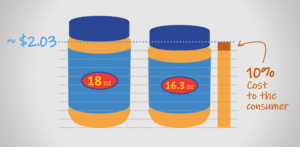
For instance, during the 2008 financial crisis, Skippy peanut butter reduced its jar size from 18 ounces to 16.3 ounces, yet the price remained unchanged. This translates into over a 10% price increase for the consumer (looking at price per ounce). Such modifications are often implemented discreetly, making them less noticeable to the average shopper. (entrepreneurship.babson.edu)
This is a complex relationship between the brand perception and reputation with consumer. It can erode consumer trust and is particularly complicated if it involves a well-known metric, like a 12-pack of 12-ounce soda cans. Consumers are less likely to accept changes to well-known sizes. Coca-Cola and Pepsi know this all too well, which is why a 12 oz. can of soda has remained that way for many years.
Consumer Awareness and Reactions
Research indicates that a significant portion of consumers are aware of shrinkflation. A study by YouGov found that 73% of American consumers expressed concern about this practice, with 41% being “very concerned.” Products commonly identified include snacks, beverages, and household items. (business.yougov.com)

Repeated use of shrinkflation by brand owners can lead to frustration and anger among consumers, especially when beloved products become noticeably smaller over time. This gradual reduction in size without a proportional drop in price can make consumers feel ripped off and erode their trust in brands. For example, Reese’s peanut butter cups have shrunk multiple times over the years, with recent reports showing that the size reduction has become more noticeable, leading to widespread consumer backlash.
Similarly, Pringles cans have been affected by shrinkflation, with some consumers noticing a reduction in chip count while the price remains the same. A viral image showed the shocking difference between older and newer Pringles cans, sparking frustration among snack lovers who felt they were paying more for less. (nypost.com)
Balancing Business Needs and Consumer Trust
While shrinkflation can be an effective tool for managing rising costs, it poses risks to brand perception and reputation. Transparency is crucial. Brands that openly communicate changes in product sizing and the reasons behind them are more likely to maintain consumer trust. Conversely, perceived deception can result in negative publicity and a decline in customer loyalty.
For example, in 2023, the French supermarket chain Carrefour began alerting customers to shrinkflation practices by placing warning labels on products that had reduced in size. This initiative aimed to promote transparency and protect consumer interests. (en.wikipedia.org)
How TRC Insights Can Assist
Understanding consumer perception is vital when navigating the complexities of shrinkflation. At TRC Insights, we specialize in marketing research, providing insights that help businesses make informed decisions. Our services include:
- Brand Equity Research: Measures the impact of product changes and pricing over time. We look at key drivers of brand equity, brand loyalty metrics, and more. If shrinkflation is detected by consumers, it can erode brand health in the long run.
- Sophisticated Pricing Research: Analyze proposed pricing changes in a virtual environment using survey research. We can help you learn how different consumers trade off product sizes against pricing realities. TRC has considerable expertise in research that leads to price and product optimization. Including discrete choice, conjoint analysis, and simpler techniques like Gabor-Granger.
By leveraging our expertise, you can implement pricing and product strategies that balance operational necessities with consumer expectations, ensuring sustained brand integrity and profitability.
Sources


